Wardogs T-72 Tank Survival Guide
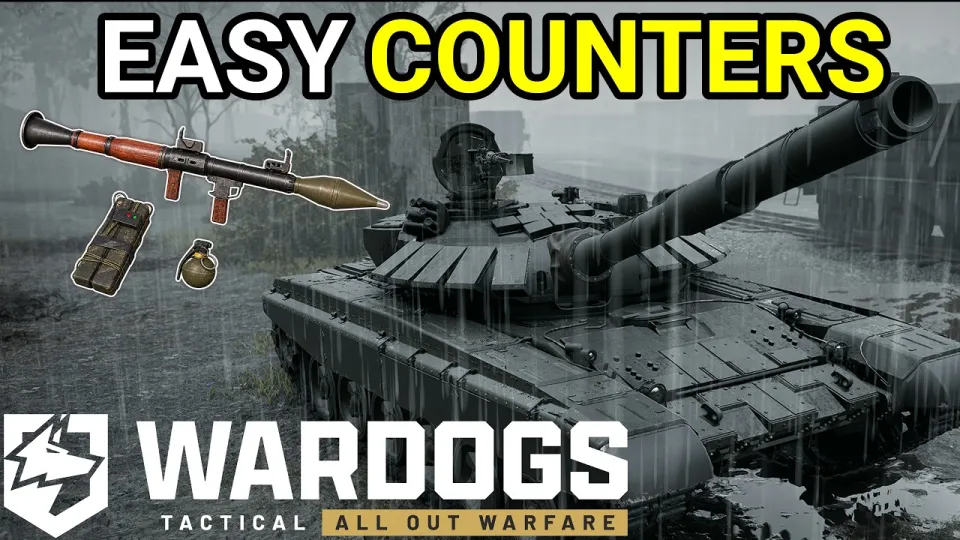
Video: Why Everyone Hates the T-72 Tank in WARDOGS
You can order the same kind of articles for your own video to boost it on YouTube and Google. Just message the Telegram bot @sat_sit_bot. Articles with your video embedded are written and posted by the bot itself — on popular topical sites (no ads). Try it free: 50 articles on us.
Key takeaways
- The T-72 in Wardogs is a multi-crew armored vehicle that dominates open ground but has no passive health regeneration for its crew.
- RPG hits register inconsistently against the T-72, and splash damage from near misses is widely reported as doing more damage than direct impacts.
- C4 planted on the hull and grenades thrown from beyond spotting range are the most reliable infantry counters.
- The tank's third-person view lets the crew spot infantry before the infantry can see the tank, which makes flanking harder than it looks.
- Armed helicopters and heavy artillery are gated behind a 20-point threshold, while the T-72 has no equivalent restriction.
The Wardogs T-72 tank is not unbeatable, but it is unforgiving: it rewards a coordinated crew and punishes solo players who attack it from the front. The reliable ways to kill it are C4 planted on the hull, grenades thrown from outside its spotting range, massed RPG fire from two or more angles, and armed helicopters or artillery once your team passes the 20-point threshold. Most complaints about the tank come from fights where none of those conditions were met.
Why the Wardogs T-72 tank feels overpowered
The core problem is information, not armor. The T-72 crew works from a third-person view, so they can see infantry approaching from angles the infantry cannot see them from. Players who try to sneak along a wall or through a treeline often get spotted first and shot before they can line up a shot. Add a turret that traverses quickly and a main gun that one-shots infantry, and the tank becomes a farming machine against teams that are not bringing counters.
A second factor is progression. The tank is available early, while the tools that answer it are not always in the hands of the average player. Armed helicopters and heavy artillery sit behind a 20-point threshold, so a tank can roll out while the other team still has no air or indirect answer. That asymmetry, not raw durability, is what drives most of the frustration.
What actually damages a T-72
Damage against the T-72 is not a single number; it depends on where the warhead lands and how the game resolves the hit. The practical ranking of infantry tools looks like this:
- C4 placed directly on the hull. This is the highest-value infantry kill and the reason logistics players carry explosives in their loadout.
- Grenades thrown from cover. Because you can throw from further than you can reliably aim an RPG under pressure, grenades produce more consistent chip damage and can finish a damaged tank.
- RPG hits from the side or rear. A single rocket rarely kills; two or three from different angles will.
- Indirect fire from artillery or mortars, which forces the crew to move and breaks their camping pattern.
- Armed helicopters, which are the cleanest hard counter once unlocked.
A recurring complaint is that RPG splash from a near miss sometimes registers harder than a direct hit. Whatever the cause, the practical takeaway is the same: do not assume a hit means damage. Fire from close range, from an angle the turret is not facing, and keep a second rocket ready.
Common mistakes when attacking armor
Most failed tank kills in Wardogs share the same three errors. The first is attacking alone: one player with an RPG against a crewed tank is a trade the tank wins almost every time. The second is attacking from the front, where the turret is already pointed and the crew is already looking. The third is standing still after firing, which gives the gunner a free follow-up shot.
A subtler mistake is chasing. Once a T-72 crew spots infantry, they often reverse out of the engagement rather than brawl, and a player on foot cannot catch a tracked vehicle in open ground. The better response is to let it go, note the direction, and set up where it will have to come back through, or switch to a vehicle of your own.
Why infantry support decides tank fights
The T-72 is designed to operate with infantry nearby, and in Wardogs that doctrine holds. A tank with two or three players watching its flanks is dramatically harder to kill than a lone crew, because the supporting players cover the angles the turret cannot. Conversely, a tank pushing without support is exposed to exactly the C4 and grenade plays described above.
The catch is player count and cooperation. Running a properly supported tank effectively takes a full squad, and public matches rarely produce that level of coordination. That is why the same vehicle feels unstoppable when the enemy drives it and paper-thin when you do: the difference is almost always who is standing next to it.
Typical player questions about the T-72
Several recurring doubts come up around the tank. One is unlock timing: should the T-72 be gated behind the same 20-point threshold as helicopters and heavy artillery? Players who argue yes point out that armor arriving before its counters creates the exact imbalance that makes matches snowball.
Another is driver survivability. Crew members are squishy, and players who invest in driver progression often find themselves dying to a single well-placed rocket the moment they dismount. That makes the tank a commitment: you are strong inside it and vulnerable outside it, with no passive regeneration to bail you out.
A third is spotting. Because the crew sees in third person and the engine is loud enough to hear from roughly 150 meters, the tank is rarely a surprise. If you hear it before you see it, you already have the information you need to set an ambush instead of walking into one.
How to counter the T-72 consistently
Treat the tank as a team problem with a fixed checklist. First, confirm the tank's position and heading, using sound and callouts rather than direct line of sight. Second, get one player with C4 onto its flank while a second player fires an RPG from the opposite side to pull the turret. Third, use grenades to finish the job if the crew survives and tries to repair or reposition. Fourth, if your team has passed 20 points, call in the helicopter or artillery rather than feeding more infantry into the fight.
On defense, the same logic applies in reverse: if you are in the T-72, never push without infantry watching your flanks, keep moving after every engagement, and assume that any infantry squad that disappears from view is setting up a C4 run.
Summary
The T-72 in Wardogs is strong but conditional: it dominates when it has infantry support and an enemy team without counters, and it dies quickly to C4, massed RPG fire and air support. The complaints are really about availability and information, since the tank arrives before its hard counters and sees infantry first. Fix those two asymmetries and the vehicle settles into a healthy place as a high-value, high-risk asset. For a full breakdown of the argument, see the video analysis by Josephant, which walks through what damages the T-72 and where players go wrong with RPGs, C4 and grenades.
Questions & answers
Is the T-72 tank in Wardogs actually overpowered?
It is strong in specific conditions rather than universally overpowered. A crewed T-72 with infantry support against a team without C4, rockets or air support will dominate. The same tank caught alone by two players with explosives dies quickly, so the outcome depends far more on coordination than on raw stats.
What is the best way to destroy a T-72 as infantry?
C4 planted directly on the hull is the most reliable infantry kill. If you cannot close the distance, throw grenades from cover or fire RPGs from two different angles so the turret cannot face both threats. Attacking alone from the front is the fastest way to lose the engagement.
Why do RPGs sometimes seem to do more damage when they miss?
Many players report that splash from a near miss registers harder than a direct impact, which suggests inconsistent hit resolution against the tank's armor. Until that is addressed, fire from close range and assume a hit may not register, keeping a second rocket ready.
Should the T-72 unlock at the same 20-point threshold as helicopters?
That is one of the most common suggestions, since armed helicopters and heavy artillery are already gated at 20 points while the tank is not. Gating armor the same way would ensure the counters exist before the tank arrives, which addresses the availability complaint rather than the tank's durability.
Source: Why Everyone Hates the T-72 Tank in WARDOGS · Markdown version