Rust solo survival in 2026 building next to Oil Rig and holding the wipe
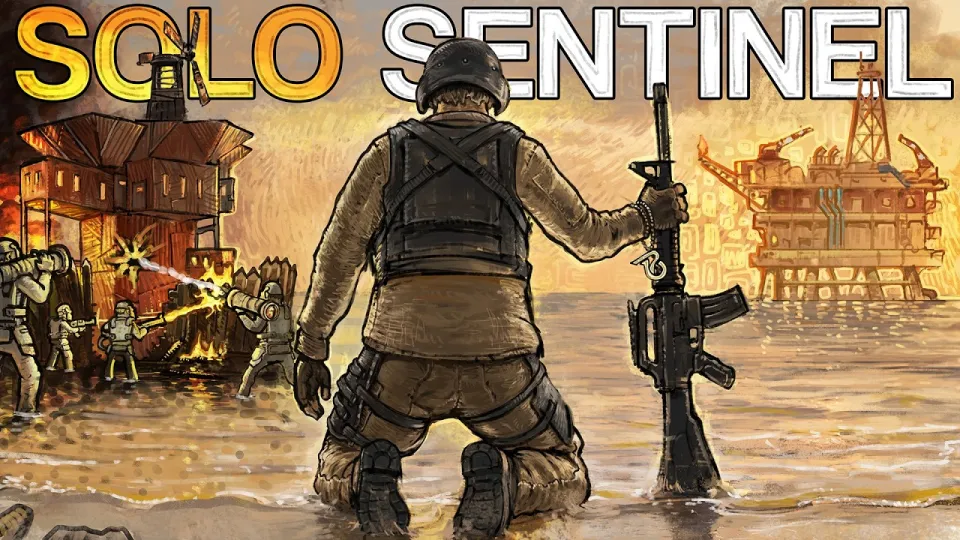
Video: The Solo Sentinel - Rust
You can order the same kind of articles for your own video to boost it on YouTube and Google. Just message the Telegram bot @sat_sit_bot. Articles with your video embedded are written and posted by the bot itself — on popular topical sites (no ads). Try it free: 50 articles on us.
Key takeaways
- Blooprint's solo run is built around a base placed directly next to Oil Rig, turning a high-traffic monument into a constant source of fights and loot.
- The run includes a wipe-day snowball, a fresh-wipe start and multiple base defense situations against raiders using rockets.
- Solo play means no team comms: every decision, from crafting a codelock to placing turrets at 3:30 AM, is narrated to the viewer.
- Viewer feedback pushed for more solo content, with many calling the struggle-and-progression format more engaging than fast T2/T3 team runs.
- The channel's base design was reused by viewers on weekly servers, where attackers panic when a defender comes from underwater.
Rust solo survival means building and defending a base alone on a live server, and one of the hardest versions of that is claiming ground right next to Oil Rig, where every passing group is a potential raid. In Blooprint's "The Solo Sentinel" run, the entire wipe is organized around that single decision: a small base in range of one of the most contested monuments in the game, held by one player against teams. You can follow the channel's live streams and see the same style of play in real time on Blooprint's Twitch channel.
What makes a solo base next to Oil Rig so risky
Oil Rig is a magnet for groups because it pays out military crates, elite crates and heavy weapon loot, so a base within sight of it is never quiet. A solo player there accepts three constant pressures: groups passing through on boats and minicopters, players scouting the shoreline for easy doors, and raiders who know the owner is alone and cannot counter-raid with numbers. The upside is equally clear: you never travel far for a fight or for loot, and every failed attack on your base leaves gear at your doorstep. The design principle is to make the base cheap enough to lose but annoying enough that a raid costs more rockets than the loot is worth.
How the solo run plays out from wipe day
The run starts as a snowball: a fresh wipe, a small starter, and a push toward the coast near the monument before larger groups settle in. From there the progression is the classic solo curve — secure a codelock, get a workbench down, then upgrade walls and add turrets while the server is still chaotic. Late in the session the base is being reinforced at 3:30 AM, which is exactly when the neighbors are also awake and sending rockets. That timing is not a detail: on a busy server the quiet hours are when solo bases get tested, because raiders assume the owner is offline or tired.
Base design and defense lessons from the run
A solo base near a monument lives or dies on layout, not on size. Practical takeaways from this style of build:
- Keep the footprint small and honeycombed so a rocket raid costs more than the footprint suggests.
- Put turrets where they cover the approach from the water, since boats and divers are the fastest route to a shoreline base.
- Split loot across several rooms instead of one vault; a single lucky breach should not end the wipe.
- Use the monument's traffic as an alarm — gunfire at Oil Rig tells you who is on the server and roughly where.
- Keep a secondary stash or a small fallback base so a lost main does not mean a lost wipe.
Viewers have reported copying this kind of design on weekly servers and finding that attackers panic when the defender appears from underwater rather than through a door. That reaction is the whole point of a shoreline build: the fight happens on your terms.
Why solo content resonates more than stacked team wipes
The most common piece of feedback on this run is that solo Rust tells a better story than a fast team progression. In a group, a wipe can reach tier two and tier three gear within twenty minutes, and the tension disappears. Alone, every workbench upgrade, every furnace load and every codelock craft is a decision the viewer can follow, and the commentary is aimed directly at the audience instead of at teammates. That is also why the small human moments land: a sign reading "Employed Persons Base" gets more laughs than any raid, and a neighbor asking why anyone is awake at 3:30 AM is funnier when the answer is that the base is still being upgraded.
Typical questions from viewers about solo Rust
Solo players watching this run tend to raise the same doubts, and they are worth answering directly.
- Is a base next to Oil Rig viable without a team? Yes, if it is small, cheap and covered by turrets; the goal is to tax raiders, not to win a straight fight against four players.
- Do you need high-tier gear to defend? No. Doors, honeycomb, turrets and good angles stop more rockets than a better gun does.
- Is it worth playing solo on a high-pop server? It is harder but faster to learn, because you get fights and raid pressure constantly instead of once a day.
- What about the people you meet? Improvised alliances with random players are one of the most popular parts of solo Rust, and they only happen when you are not already in a group.
All links from the video
- Twitch: https://www.twitch.tv/blooprint
- Kick: https://kick.com/blooprint
- TikTok: https://www.tiktok.com/@blooprintgames
- Twitter: https://twitter.com/blooprintgames
- Discord: https://discord.gg/blooprint
Final thoughts on holding ground as a solo
The Solo Sentinel is a compact argument for playing Rust alone: a base next to Oil Rig, a wipe-day snowball, and a defense that costs attackers more than it earns them. It shows that solo survival is a design problem before it is an aim problem — footprint, turrets, loot spread and timing decide more fights than raw PvP skill. The run also proves that commentary-driven solo content gives viewers something team videos cannot: a seat next to one player making every call. Blooprint's breakdown of this wipe is the reference point for anyone trying the same build, and the live version of that play is waiting on Blooprint's Twitch stream.
Questions & answers
Can a solo player really hold a base right next to Oil Rig in Rust?
Yes, but only with the right build. A small honeycombed base with turrets covering the water approach forces raiders to spend more rockets than the loot is worth. The solo player is not trying to win a straight fight against a group, only to make the raid unprofitable.
Why do viewers prefer solo Rust videos over team progression?
Because the pace is slower and more legible. In a group, a wipe can hit tier two and tier three gear in about twenty minutes, which removes the tension. Solo runs keep every workbench upgrade and codelock craft meaningful, and the creator talks directly to the audience instead of to teammates.
What should a solo base near a monument include?
A small footprint with honeycomb, turrets aimed at the shoreline, loot split across several rooms, and a fallback stash or secondary base. Keeping the main base cheap enough to lose is what makes living next to a high-traffic monument sustainable.
Is it worth playing solo on a high-population server?
It is harder, but it teaches faster. Constant traffic near monuments means frequent fights and raid pressure, so you learn base defense, timing and resource discipline quickly. Improvised alliances with random players are also a common and popular part of solo Rust.
Source: The Solo Sentinel - Rust · Markdown version